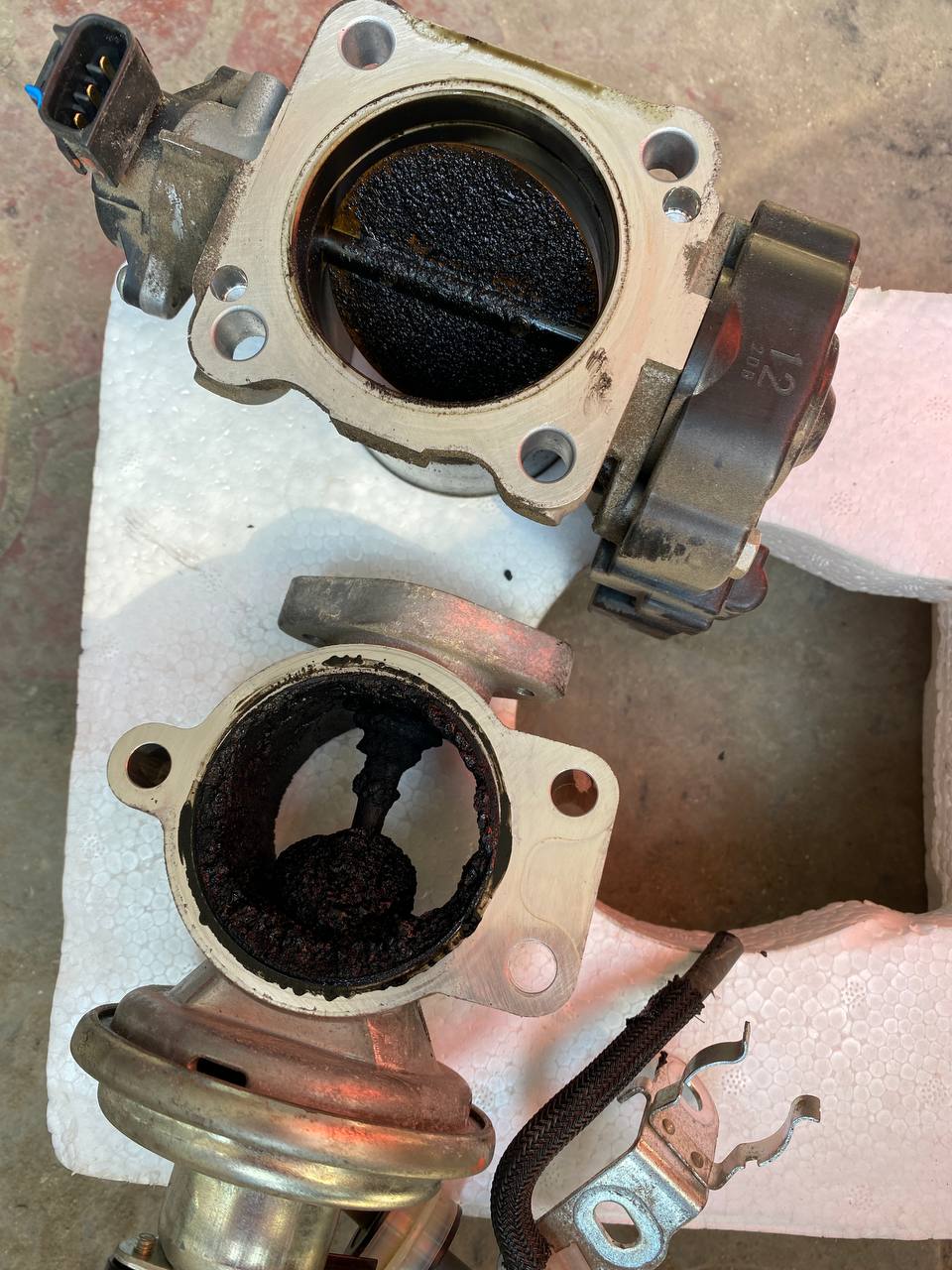
EGR Delete & Disable
What is EGR?
EGR (Exhaust Gas Recirculation) is an emissions system that routes a portion of exhaust gases back into the intake manifold. Its purpose is purely ecological — reducing nitrogen oxide (NOx) emissions in exhaust gas.
Why Do People Remove EGR?
The same reasons people remove catalytic converters and AdBlue systems: expensive repair, cheaper to blank and disable.
EGR valves are a known weak point on diesel engines. Soot from exhaust gases mixes with oil vapors in the intake manifold, forming deposits that clog the intake, foul the injectors, and contaminate the cylinders — reducing engine lifespan over time.
Signs of a Failing EGR System
- Engine hesitates and jerks during acceleration
- Rough idle or unstable RPM at idle
- Noticeable loss of engine power
- Increased fuel consumption
- Strong, acrid exhaust smell
- Black smoke from the exhaust pipe
- Check Engine light on the dashboard
How EGR Affects the Engine
Because exhaust gases contain soot, and intake manifolds carry oil vapors, the two mix and build up deposits. Over time this leads to:
- Clogged intake manifold
- Fouled injectors and cylinders
- Sticking or seized EGR valve
- Delayed throttle response
- Significant power loss — especially when the valve fails to close properly
- Black smoke under load due to insufficient fresh air
Repair Options
Option 1 — Replace with New OEM Part
Cost starts at $500+ depending on make and model. On many vehicles the new valve must be coded to the ECU. And it will wear out again.
Option 2 — Clean the Old Valve
Works short-term. Expensive and not always possible — on many engines you have to disassemble half the motor just to reach the valve. Soot builds back up quickly.
Option 3 — Source a Used Valve
Hard to find, condition unknown. Still wears out.
Option 4 — Delete & Reprogram ✅
Our recommendation. Blank the EGR mechanically and reprogram the ECU so the system is completely removed from software. Forget about the problem permanently.
How the EGR Delete Works
EGR removal is a two-step process:
Step 1 — Mechanical Blanking
A blanking plate is installed at the exhaust gas inlet point, physically preventing gases from entering the intake manifold.
Step 2 — ECU Reprogramming
This is where most errors happen at other workshops. Correct ECU work involves:
- Disabling the EGR valve — preventing it from ever opening
- Removing EGR fault codes — eliminating only EGR-related DTCs without touching other systems
- Disabling the EGR limp mode — removing the emergency mode triggered by a non-functional EGR
- Air mass recalibration — on some engines the ECU needs recalibration after EGR removal, otherwise the ECU gets confused by the unexpected air composition
⚠️ A common mistake at inexperienced shops: the tuner cannot pinpoint the EGR fault codes and deletes everything — including the diagnostic system and other critical monitors. The dashboard shows no errors, but actual faults go undetected. The car appears healthy while real problems are silently ignored.
Results After EGR Delete
- ✅ No Check Engine light
- ✅ Improved throttle response at low and mid loads
- ✅ Cleaner intake manifold over time
- ✅ No more EGR-related limp mode
- ✅ One less expensive failure point
One minor trade-off: cabin heating may be slightly slower in cold weather.
Frequently Asked Questions
Will the car smoke after EGR removal? No.
Will there be a power increase? Yes — at low and mid loads (not wide-open throttle). Throttle response improves noticeably in everyday driving.
Why not just clean it periodically? Expensive, inconvenient, and temporary. Soot builds back up quickly.
Is it legal? EGR delete affects emissions compliance. Regulations vary by country — check local requirements before proceeding.
Order EGR Delete via File Service
Send us your ECU file through our file service. We will remove the EGR system cleanly from the firmware — no leftover codes, no limp modes, no compromised diagnostics.