Catalyst Delete (Euro2)
What is the Catalytic Converter?
The catalytic converter oxidizes harmful exhaust gases before they exit the tailpipe. It works in conjunction with the lambda (oxygen) sensors — one upstream and one downstream — to monitor exhaust composition and maintain the correct air-fuel mixture.
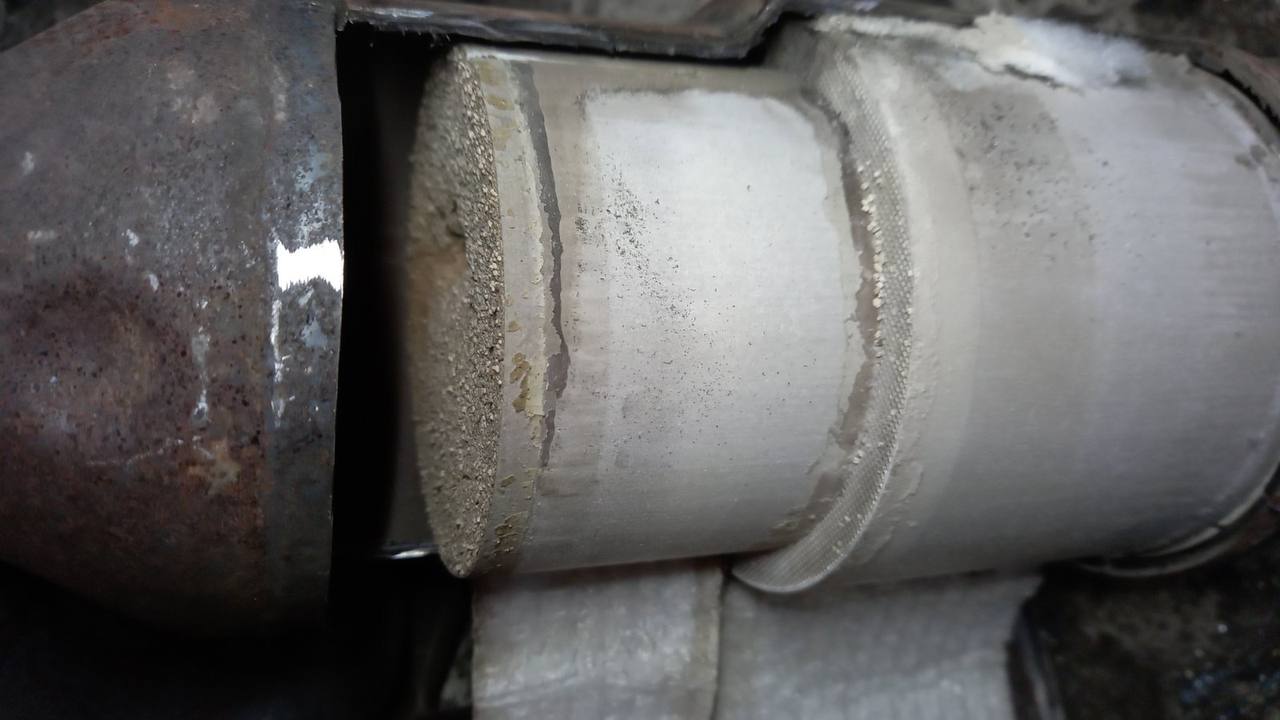
Over time the catalyst substrate degrades. After 80,000–150,000 km it becomes less effective, and fragments of the ceramic core can break off and enter the engine — potentially causing serious and expensive damage.
Signs Your Catalyst Needs Attention
- Hesitation and sluggish throttle response
- Increased fuel consumption
- Slow to build revs
- Misfiring or rough running
- Check Engine light on the dashboard (often catalyst efficiency codes P0420 / P0421)
These symptoms appear because a clogged or degraded catalyst increases exhaust backpressure. The ECU also receives incorrect signals from the downstream lambda sensor, causing it to over-enrich the mixture — which further reduces power and wastes fuel.
When to Consider Catalyst Delete
By mileage: Most catalysts degrade between 80,000 and 150,000 km, though some fail as early as 30,000 km depending on fuel quality and driving conditions.
By condition: Once the ceramic core starts breaking apart, fragments can be drawn back into the engine. At that point replacement or removal is no longer optional — it is urgent.
By cost: OEM replacement catalysts are expensive. A non-OEM replacement may not trigger fault codes initially but will degrade faster. Many owners choose permanent removal over repeated replacement.
What the Service Includes
Step 1 — Physical Removal
The catalyst is removed from the exhaust system. Depending on the vehicle, it is replaced with either:
- A flame arrestor (пламегаситель) — a straight-through metal tube with an internal spiral that cools exhaust gases, reduces noise, and protects the exhaust system from heat. Used on naturally aspirated engines.
- A downpipe — on turbocharged vehicles, a free-flow downpipe replaces the catalyst section for maximum exhaust flow.
The flame arrestor reduces backpressure compared to the original catalyst — exhaust gases exit with less resistance, which increases power and throttle response.
Step 2 — ECU Reprogramming to Euro 2
This step is mandatory. Without it the ECU will detect the missing catalyst via the downstream lambda sensor and trigger Check Engine immediately.
Correct ECU work includes:
- Catalyst monitoring disabled — downstream lambda sensor readings no longer used for catalyst efficiency checks
- Lambda correction adjusted — ECU fuel trim recalibrated to work correctly without the post-cat sensor feedback loop
- All catalyst fault codes removed — P0420, P0421 and related codes permanently deleted
- ECU recalibrated to Euro 2 standard — the emissions monitoring algorithm is updated to match the new exhaust configuration
- Limp mode disabled — the engine no longer enters restricted mode due to catalyst status
⚠️ Simply removing the catalyst without ECU reprogramming will result in permanent Check Engine, incorrect fuel mixture, and potential engine damage from over-enrichment. The software work is not optional.
Results After Catalyst Delete
- ✅ No Check Engine light
- ✅ Improved throttle response and power
- ✅ Reduced fuel consumption
- ✅ No risk of ceramic fragments entering the engine
- ✅ No more catalyst-related fault codes
- ✅ Lower long-term maintenance costs
Note: Catalyst delete affects emissions compliance. The vehicle will no longer meet Euro 3 or higher emissions standards. Check local regulations before proceeding.
Order via File Service
Send us your ECU file through our file service. We reprogram the firmware to Euro 2 standard and return a clean file ready to flash.
- Read your ECU file using your preferred tool
- Upload at fs.carberry.pro
- Select Catalyst Delete
- Receive your reprogrammed file